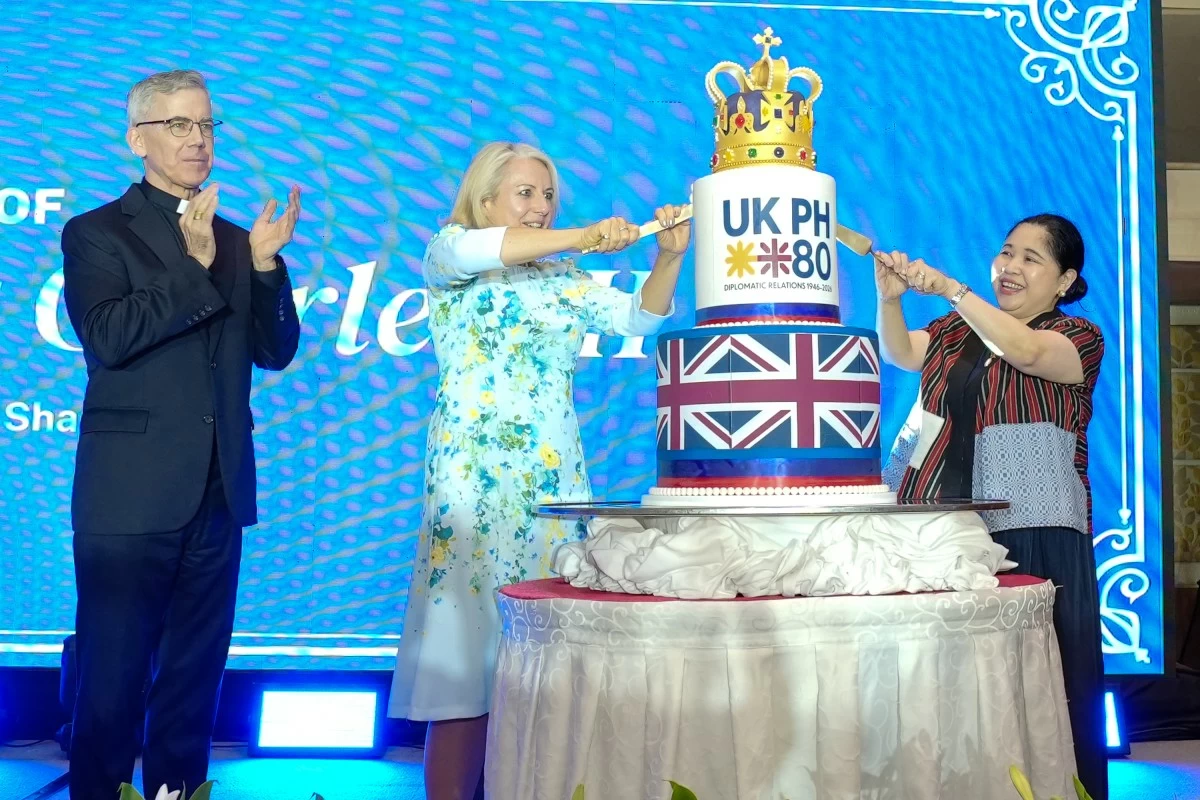
This year, the Philippines and the United Kingdom are celebrating 80 years of diplomatic relations. A milestone marked by growing trade, expanding security cooperation, and increasingly ambitious partnerships on climate, education, and development. But perhaps the strongest measure of the relationship is not found in policy papers or economic statistics. It is found in people. More than 200,000 Filipinos now live and work in the UK, serving in hospitals, classrooms, businesses, research institutions, and local communities across the country. Their presence—and their contributions—have become an important part of the story of modern UK-PH relations. Those connections were one of the key highlights as the British Embassy in Manila hosted the official celebration of the birthday of His Majesty King Charles III at Makati Shangri-La, an occasion that also marked eight decades of friendship between the two nations. “This year is a special milestone, 80 years of diplomatic relations between the United Kingdom and the Philippines,” British Ambassador Sarah Hulton told guests. “Tonight is about both honoring that history and looking forward ahead to what we can build together for the future.” For Hulton, the anniversary carries a personal significance. The Philippines was her first overseas posting at the beginning of her diplomatic career two decades ago. “The warmth and welcome I encountered then have stayed with me,” she said. “To return now as the United Kingdom’s ambassador and to mark 80 years of friendship is a real privilege.” The relationship she returned to is considerably broader than the one she first encountered. Annual bilateral trade has reached £3.2 billion, while cooperation now spans defense, maritime security, renewable energy, climate resilience, peacebuilding, and education. “Ultimately, it is people who make this relationship what it is,” Hulton said. That theme was reflected throughout the evening. Guests were treated to familiar British favorites including fish and chips, miniature beef Wellington prepared by Gordon Ramsay Bar & Grill Manila, and gin- and whisky-based cocktails showcasing some of Britain’s best-known exports. Representing the Philippine government, Department of Foreign Affairs (DFA) Undersecretary Ma. Theresa Dizon-De Vega highlighted the role of the Filipino community in Britain, particularly in healthcare. “The United Kingdom is also home to the largest Filipino community in the European region,” she said. Among them are approximately 35,000 Filipino nurses working in Britain’s National Health Service. One of the most recognizable is Filipino-British nurse May Parsons, who administered the world’s first Covid-19 vaccine outside clinical trials in December 2020. The moment became a powerful reminder of the contribution Filipinos continue to make to British society. The Filipino presence is increasingly visible beyond healthcare. In London, chef Florence Mae Maglanoc has introduced contemporary Filipino cuisine to a wider audience through restaurant “Donia” and “Panadera”, her Filipino bakery with branches in Marylebone and Soho. Jollibee, meanwhile, has expanded steadily across the UK since 2018, including a flagship branch in Leicester Square. Educational ties have also played an important role. For more than four decades, the UK’s Chevening Scholarship programme has supported over 540 Filipinos, many of whom have gone on to serve in government, business, media, academia, and civil society. The programme remains one of the most enduring bridges between the two countries. The evening also highlighted the growing strategic dimension of the partnership. Since launching their Enhanced Partnership in 2023, the Philippines and the United Kingdom have expanded cooperation on maritime security, climate action, science and technology, renewable energy, and regional stability. Hulton reaffirmed Britain’s support for the Philippines in upholding UNCLOS and the 2016 Arbitral Award, while discussions continue toward a visiting forces agreement that would further deepen defense cooperation. The UK has also supported Philippine climate resilience efforts through initiatives such as the Philippine Adaptation Investment Platform, which has developed a £250 million pipeline of adaptation projects in the agriculture sector. For De Vega, however, some of the most enduring aspects of the relationship are found in personal encounters. She recalled meeting then-Prince Charles during a diplomatic reception at Buckingham Palace in 2009, when he immediately recognized the piña fabric worn by members of the Philippine delegation. “It was a brief but memorable encounter that reflected his genuine interest in cultures and traditions from around the world,” she said. Eighty years after diplomatic ties were established, relations between the Philippines and the UK continue to be strengthened not only by governments, but by the communities, professionals, students, entrepreneurs, and families who connect both countries every day. Trade will grow. New agreements will be signed. Strategic priorities will evolve. But it is those human connections that have sustained the relationship for the past 80 years—and will likely define the next 80 as well.
Read Full ArticleThis article was originally published on mb. Click the button above to read the complete article.